Hitachi- from the country that brought the world Fukushima

Hitachi- from the country that brought the world Fukushima
We feel very sad for the people of Japan who want to end nuclear energy whilst a potential new government and big business are desperate for it

No Fukushima at Oldbury

No to Fukushima at Shepperdine!

No to Fukushima at Shepperdine!
オールド全く福島ません

Wednesday, 13 April 2011

Will Olkiluoto ever open?

As things progress at Fukushima and the increasing understanding around the world of how dangerous nuclear energy is the question is will Olkiluoto and Flammanville ever be commissioned? or will they remain giant empty non toxic, non radioactive cathedrals to the follies of human kind.


Greenpeace Protesters at Nuclear Plant

published Mon 11:13 AM, updated yesterday 06:23 AM
Olkiluoto.
Image: YLE Turku / Dmitri Volgin
Greenpeace activists demonstrated at the Olkiluoto nuclear plant on Monday morning, aiming to highlight shortcomings in the plant’s security. The activists described protesting at the territory of the nuclear facility, but the energy company Teollisuuden Voima says they only got as far as the office area.
Greenpeace announced that two of its activists would visit the Olkiluoto nuclear plant area early in the morning in order to demonstrate security deficiencies at the facility.
The organisation says that the activists got into the facility through the intake opening for cooling water, after which they proceeded to demonstrate on a rooftop inside the facility.
Security guards at the nuclear plant detained the activists, and the police then took them away, according to Senior Vice President for Corporate Relations Anna Lehtiranta from Teollisuuden Voima.
Lehtiranta says that it is impossible to block the cooling water intake opening. According to Lehtiranta, activists did not get through to the real nuclear facility territory, but only to the office area. They were however near the nuclear plant, Lehtiranta acknowledges.
Operating personnel and guards are present at the Olkiluoto nuclear facility around the clock, but for security reasons Lehtiranta declined to say how many.
Police questioned and released the three intruders on Monday afternoon. A preliminary investigation into the incident is continuing.
YLE

Rory needs our support and now.


bristol_evening_post

To stop the manipulations and machinations of this pro nuke government and the judiciary Rory Walker of Lancaster needs your financial support now.


Money needed to fund nuclear legal case

Money  needed to  fund nuclear legal case
A GROUP fighting moves to put new nuclear reactors near Bristol has appealed for help to fund a legal challenge.
Judicial review proceedings were started recently by a man who is opposed to plans for up to 20 next-generation reactors at eight sites around the country.
They include as many as three on land next to the existing Oldbury atomic station, near Thornbury, where two reactors have been providing electricity for the past 41 years.
Rory Walker, 24, who lives near the Heysham station in Lancashire, is taking his fight against Energy SecretaryChris Huhne to the High Court.
He believes Mr Huhne has not met his obligations in law over the issue and is putting at risk the health of residents in areas which could get the reactors.
Mr Walker has been granted legal aid and a procedural hearing will be held in May to decide whether the application will proceed to a full judicial hearing on its merits.
But the Legal Services Commission, which administers legal aid, said a contribution of £16,250 should be made by other citizens who would benefit from his application if it were successful.
Mr Walker's solicitors, Irwin Mitchell, said it was not unusual for a contribution to be required in such circumstances but the amount was unusual. Arguments against the "somewhat arbitrary demand" are being made but Mr Walker's supporters said it was becoming clear that a large sum would be needed.
If the amount cannot be raised, Mr Walker will lose his legal aid and the protection it gives against paying costs if the case is lost.
So far a fighting fund has received pledges for more than £4,000 and Oldbury campaign group SANE - Shepperdine Against Nuclear Energy - has asked its members if they can help. Its chairman, Reg Illingworth, said: "I'm personally pledging some money to the case. Rory's doing a fantastic job."
Nuclear power has been put forward as a means of Britain filling the energy gap and cutting carbon emissions. But the Fukushima nuclear crisis in Japan has highlighted safety concerns.

Activists Blockade EDF in Central London


As people become more aware of the dangers of new nukes EDF, RWE and E.on can expect the people of this country to understand the motives of these global mega-powers and to move to companies such as Good Energy and Ecotricity for their electricity.


BG could be another alternative supplier we at SANE could recommend if they ditched their £2billion investment in British Energy, BG---sell up now and let the French Nationalised company, EDF swing on this investment.

Allez les verts.........


Activists blockade EDF in London

Boycott EDF's picture
ACTIVISTS BLOCKADE QUEEN’S BACK YARD TO BRAND ENERGY GIANT’S NUCLEAR POWER BID A ‘RIGHT ROYAL RIP-OFF’
 
 
Campaigners brought rush hour traffic to a standstill this morning to protest against EDF Energy’s plans to build a new generation of nuclear power stations in the UK. All four lanes of the A302 outside EDF Energy’s headquarters in Grosvenor Place – which runs alongside the gardens of Buckingham Palace – were sealed off shortly after 8am using 14-foot tripods. The cleared zone was then declared a ‘nuclear disaster area’.
 
Campaign group, Boycott EDF, says the energy giant is spearheading a ‘nuclear renaissance’ which could see the construction of at least ten new nuclear reactors – a move spokeswoman, Bella Benson, claims will spell disaster for the UK.
 
“EDF has spent a massive amount of money marketing itself as an environment-friendly company,” says Benson. “But the truth is that it’s planning to lumber us with an outdated form of energy that is incredibly dangerous, extremely expensive and completely unnecessary. As the company’s HQ Is opposite Buckingham Palace, it would be fitting to call their plan a right, royal rip-off.”
 
Benson apologised to motorists delayed by the protest but adds, “The inconvenience caused today pales into insignificance compared with the dangers that EDF Energy is planning to impose on the British public. The government is trying to slip the nuclear energy issue through the back door and this is the only way we can get our voice heard.”
 
Boycott EDF says a ‘nuclear renaissance’ will mean soaring electricity bills. Says Benson: “Nuclear power is so dangerous that millions has to be spent on safety measures. The government claims that the public won’t have to subsidise the costs of ‘new nuclear’ but you can be sure we will end up taking a hit – through hidden subsidies such as fixed-price contracts and a hike in our electricity bills (1).”
 
Recent research in Germany has found that young children are more than twice as likely to contract leukemia if they live near a nuclear power station (2). “The nuclear industry has been trying to down-play the effects of radiation after the tragedy at Fukushima,” Benson adds. “But decades of mismanagement by the nuclear sector has left us with a legacy of cancers and hundreds of tonnes of toxic radioactive waste that nobody know what to do with. Nuclear energy has no place in the 21st century.”
 
And the campaign insists that nuclear power is the worst possible option for combating climate change. Benson explains: ‘The new EPR reactor is untried and untested and will produce waste that is even more toxic. Moreover, documents leaked from EDF Energy show that there are serious design flaws.’
 
EDF has already caused great concern  - even before construction of ‘new nuclear’ has started. An independent report published last year found that land designated for EDF’s two new mega-reactors at the Hinkley Point nuclear power plant in Somerset is heavily contaminated with enriched uranium. But EDF has dismissed the report.  “With such a hazardous form of energy, best practice must be observed at every stage. We find EDF’s attitude shocking,” Benson concludes.
 
Cheaper, greener alternative strategies have been put forward by respected organisations including Greenpeace, the Sustainable Development Commission and the New Economics Foundation (3).  Says Benson, “The billions earmarked for new nuclear power stations should be invested in further developing safe forms of energy such as renewables and the type of district heating plants (combined heat and power plants) that can be run on biogas. It’s a scandal that there hasn’t been an informed public debate about this issue.”
The campaign is urging customers of EDF Energy to say ‘no to new nuclear’ by switching to other energy providers. It is also asking the public to boycott events and attractions  - such as the London Eye  - sponsored by the company.
 
Boycott EDF Energy’s blockade continues.
 
For the latest news from activists outside EDF’s HQ go to Twitter: @NoNewNukz


Notes
 
Note 1: The government’s recent decision to artificially increase the carbon floor price was ostensibly to encourage investment in the ‘nuclear renaissance’. It has been estimated that the increase will add at least 4% to electricity bills by 2016. 
 
Note 2: evidence by Dr Ian Fairlie to the House of Commons:


Note 3: the above reports can be found at:


For more information on the campaign go to: http://boycottedf.org.uk
 
‘I do not believe a single word that issues from the mouth of a single spokesperson for the nuclear industry.’ JONATHON PORRITT, June,2010.

Tuesday, 12 April 2011

Fukushima goes to 7


April 12, 2011
INES (the International Nuclear and Radiological Event Scale) Rating on the Events in Fukushima Dai-ichi Nuclear Power Station by the Tohoku District - off the Pacific Ocean Earthquake
1. INES INES is the rating, which International Atomic Energy Agency (IAEA)
and Nuclear Energy Agency, Organization for Economic Cooperation and Development (OECD/NEA) established and proposed to the Member States in March 1992, in order to indicate the impact on safety by the individual event in a nuclear facility and so on. Japan has also utilized it since 1 August 1992.
2. Events in Fukushima Dai-ichi NPS, TEPCO, by the Tohoku District - off the Pacific Ocean Earthquake
On 18 March, the ratings of the events in Fukushima Dai-ichi NPS by the Tohoku District - off the Pacific Ocean Earthquake were informed to be temporarily assessed as Level 5, considering information obtained before March 18th. However, Nuclear and Industrial Safety Agency (NISA) estimated the total amount of discharged radioactive materials from the reactors of Fukushima Dai-ichi NPS to the air, making a trial
The Rating of the International Nuclear and Radiological Event Scale (INES) on the events in Fukushima Dai-ichi Nuclear Power Station (NPS), Tokyo Electric Power Co. Inc. (TEPCO), caused by the Tohoku District - off the Pacific Ocean Earthquake is temporarily assessed as Level 7, considering information obtained after March 18th.
However, the amount of discharged radioactive materials is approximately 10 percent of the Chernobyl accident which was assessed on the same level.calculation using the result of analysis of the situation of the reactors and so on, which was carried out by Japan Nuclear Energy Safety Organization (JNES). This estimation resulted in the value corresponding to Level 7 of INES rating*, as listed in the following table..
* The value representing radiation impact, which is converted to the amount equivalent to 131I (Iodine), exceeds several tens of thousands of tera-becquerel (of the order of magnitude as 1016 Bq).
In addition, Nuclear Safety Commission of Japan (NSC) also estimated and announced the result of the trial calculation in the current stage regarding the total amount of discharged radioactive materials to the air, which had been being carried out in the Commission. This trial calculation is counted backward from the results of monitoring data of 131I and 137Cs (Caesium) as the total amount of the discharge from the Fukushima Dai-ichi NPS, This results in the value corresponding to Level 7 of INES rating as well.
(Reference) from Fukushima Dai-ichi NPS Amount of the
Assumed amount of the discharge
Estimated by NISA NSC
discharge from the Chernobyl accident
1.8×10¹⁸ Bq
8.5×10¹⁶ Bq 3.4×10¹⁸ Bq
5.2×10¹⁸ Bq
Announced by
131I ... (a)
137Cs
(Converted value to 131I) ... (b)
(a) + (b)
1.3×10¹⁷ Bq
6.1×10¹⁵ Bq 2.4×10¹⁷ Bq
3.7×10¹⁷ Bq
1.5×10¹⁷ Bq
1.2×10¹⁶ Bq 4.8×10¹⁷ Bq
6.3×10¹⁷ Bq
(Notes)The conversion of the values to be equivalent to radiation impact of 131I regarding the NISA’s estimation and the NSC’s
announcement were carried out by NISA in accordance with the INES User’s Manual.
Although Level 7 is the highest level of INES rating, it is estimated that the amount of discharged radioactive materials to the environment in the current stage is approximately 10 percent of the Chernobyl accident, which was assessed on the same level in the past.
3. Procedures to be taken This information is about the result of the total amount of the
discharge from Fukushima Dai-ichi NPS in the current stage. As radioactive materials are being released to the environment, NISA will continuously gather and evaluate information.
In addition, the official level of INES will be determined, considering the technical evaluation from specialist view points made by INES Evaluation Subcommittee (Chairman: Dr. Naoto Sekimura, Professor of University of Tokyo, Nuclear Professional School Engineering, Department of Nuclear Engineering and Management), which set up in the Nuclear and Industrial Safety Subcommittee of the Advisory Committee for Natural Resources and Energy, after the recurrence prevention measures are confirmed based on the concrete causes found.
(Contact Person) Mr. Toshihiro Bannai Director, International Affairs Office,
NISA/METI Phone: +81-(0)3-3501-1087

Monday, 11 April 2011

Caldicott rips Monbiot apart in his own newspaper....Well done The Guardian


The excuse of a journalist called Monbiot is ripped apart following his recent dismal performance against Jeremy Leggett on Newsnight.


George why don't you give up and go and do something you are better at, may be a civil servant?

We can't wait to see Helen in Bristol on Thursday!!


How nuclear apologists mislead the world over radiation

George Monbiot and others at best misinform and at worst distort evidence of the dangers of atomic energy
A girl is screened in Iitate, about 40km from the damaged Fukushima nuclear plant, where high levels of radiation have been detected. Photograph: Takumi Harada/AP
Soon after the Fukushima accident last month, I stated publicly that a nuclear event of this size and catastrophic potential could present a medical problem of very large dimensions. Events have proven this observation to be true despite the nuclear industry's campaign about the "minimal" health effects of so-called low-level radiation. That billions of its dollars are at stake if the Fukushima event causes the "nuclear renaissance" to slow down appears to be evident from the industry's attacks on its critics, even in the face of an unresolved and escalating disaster at the reactor complex at Fukushima.
Proponents of nuclear power – including George Monbiot, who has had a mysterious road-to-Damascus conversion to its supposedly benign effects – accuse me and others who call attention to the potential serious medical consequences of the accidentof "cherry-picking" data and overstating the health effects of radiation from the radioactive fuel in the destroyed reactors and their cooling pools. Yet by reassuring the public that things aren't too bad, Monbiot and others at best misinform, and at worst misrepresent or distort, the scientific evidence of the harmful effects of radiation exposure – and they play a predictable shoot-the-messenger game in the process.
To wit:
1) Mr Monbiot, who is a journalist not a scientist, appears unaware of the difference between external and internal radiation
Let me educate him.
The former is what populations were exposed to when the atomic bombs were detonated over Hiroshima and Nagasaki in 1945; their profound and on-going medical effects are well documented. [1]
Internal radiation, on the other hand, emanates from radioactive elements which enter the body by inhalation, ingestion, or skin absorption. Hazardous radionuclides such as iodine-131, caesium 137, and other isotopes currently being released in the sea and air around Fukushima bio-concentrate at each step of various food chains (for example into algae, crustaceans, small fish, bigger fish, then humans; or soil, grass, cow's meat and milk, then humans). [2] After they enter the body, these elements – called internal emitters – migrate to specific organs such as the thyroid, liver, bone, and brain, where they continuously irradiate small volumes of cells with high doses of alpha, beta and/or gamma radiation, and over many years, can induce uncontrolled cell replication – that is, cancer. Further, many of the nuclides remain radioactive in the environment for generations, and ultimately will cause increased incidences of cancer and genetic diseases over time.
The grave effects of internal emitters are of the most profound concern at Fukushima. It is inaccurate and misleading to use the term "acceptable levels of external radiation" in assessing internal radiation exposures. To do so, as Monbiot has done, is to propagate inaccuracies and to mislead the public worldwide (not to mention other journalists) who are seeking the truth about radiation's hazards.
2) Nuclear industry proponents often assert that low doses of radiation (eg below 100mSV) produce no ill effects and are therefore safe. But , as the US National Academy of Sciences BEIR VII report has concluded, no dose of radiation is safe, however small, including background radiation; exposure is cumulative and adds to an individual's risk of developing cancer.
3) Now let's turn to Chernobyl. Various seemingly reputable groups have issued differing reports on the morbidity and mortalities resulting from the 1986 radiation catastrophe. The World Health Organisation (WHO) in 2005 issued a report attributing only 43 human deaths directly to the Chernobyl disaster and estimating an additional 4,000 fatal cancers. In contrast, the 2009 report,"Chernobyl: Consequences of the Catastrophe for People and the Environment", published by the New York Academy of Sciences, comes to a very different conclusion. The three scientist authors – Alexey V Yablokov, Vassily B. Nesterenko, and Alexey V Nesterenko – provide in its pages a translated synthesis and compilation of hundreds of scientific articles on the effects of the Chernobyl disaster that have appeared in Slavic language publications over the past 20 years. They estimate the number of deaths attributable to the Chernobyl meltdown at about 980,000.
Monbiot dismisses the report as worthless, but to do so – to ignore and denigrate an entire body of literature, collectively hundreds of studies that provide evidence of large and significant impacts on human health and the environment – is arrogant and irresponsible. Scientists can and should argue over such things, for example, as confidence intervals around individual estimates (which signal the reliability of estimates), but to consign out of hand the entire report into a metaphorical dustbin is shameful.
Further, as Prof Dimitro Godzinsky, of the Ukranian National Academy of Sciences, states in his introduction to the report: "Against this background of such persuasive data some defenders of atomic energy look specious as they deny the obvious negative effects of radiation upon populations. In fact, their reactions include almost complete refusal to fund medical and biological studies, even liquidating government bodies that were in charge of the 'affairs of Chernobyl'. Under pressure from the nuclear lobby, officials have also diverted scientific personnel away from studying the problems caused by Chernobyl."
4) Monbiot expresses surprise that a UN-affiliated body such as WHOmight be under the influence of the nuclear power industry, causing its reporting on nuclear power matters to be biased. And yet that is precisely the case.
In the early days of nuclear power, WHO issued forthright statements on radiation risks such as its 1956 warning: "Genetic heritage is the most precious property for human beings. It determines the lives of our progeny, health and harmonious development of future generations. As experts, we affirm that the health of future generations is threatened by increasing development of the atomic industry and sources of radiation … We also believe that new mutations that occur in humans are harmful to them and their offspring."
After 1959, WHO made no more statements on health and radioactivity. What happened? On 28 May 1959, at the 12th World Health Assembly, WHO drew up an agreement with the International Atomic Energy Agency (IAEA); clause 12.40 of this agreement says: "Whenever either organisation [the WHO or the IAEA] proposes to initiate a programme or activity on a subject in which the other organisation has or may have a substantial interest, the first party shall consult the other with a view to adjusting the matter by mutual agreement." In other words, the WHO grants the right of prior approval over any research it might undertake or report on to the IAEA – a group that many people, including journalists, think is a neutral watchdog, but which is, in fact, an advocate for the nuclear power industry. The IAEA's founding papers state: "The agency shall seek to accelerate and enlarge the contribution of atomic energy to peace, health and prosperity through the world."
Monbiot appears ignorant about the WHO's subjugation to the IAEA, yet this is widely known within the scientific radiation community. But it is clearly not the only matter on which he is ignorant after his apparent three-day perusal of the vast body of scientific information on radiation and radioactivity. As we have seen, he and other nuclear industry apologists sow confusion about radiation risks, and, in my view, in much the same way that the tobacco industry did in previous decades about the risks of smoking. Despite their claims, it is they, not the "anti-nuclear movement" who are "misleading the world about the impacts of radiation on human health."
• Helen Caldicott is president of the Helen Caldicott Foundation for a Nuclear-Free Planet and the author of Nuclear Power is Not the Answer
[1] See, for example, WJ Schull, Effects of Atomic Radiation: A Half-Century of Studies from Hiroshima and Nagasaki (New York: Wiley-Lis, 1995) and DE Thompson, K Mabuchi, E Ron, M Soda, M Tokunaga, S Ochikubo, S Sugimoto, T Ikeda, M Terasaki, S Izumi et al. "Cancer incidence in atomic bomb survivors, Part I: Solid tumors, 1958-1987" in Radiat Res 137:S17-S67 (1994).
[2] This process is called bioaccumulation and comes in two subtypes as well, bioconcentration and biomagnification. For more information see: J.U. Clark and V.A. McFarland, Assessing Bioaccumulation in Aquatic Organisms Exposed to Contaminated Sediments, Miscellaneous Paper D-91-2 (1991), Environmental Laboratory, Waterways Experiment Station, Vicksburg, MS and H.A. Vanderplog, D.C. Parzyck, W.H. Wilcox, J.R. Kercher, and S.V. Kaye, Bioaccumulation Factors for Radionuclides in Freshwater Biota, ORNL-5002 (1975), Environmental Sciences Division Publication, Number 783, Oak Ridge National Laboratory, Oak Ridge, TN.


Saturday, 9 April 2011

John Urquhart's letter to Mike Weightman

SANE say: add Oldbury to the emergency evacuation procedure information, we are only 13 miles from Bristol City Centre, the potential evacuations here would be massive.


There have also been two incidents, that we the public could see, in the last four years that may have led to some sort of problem.


Dear Mike,

Response to the Fukushima disaster

Thank you for your e-mail of April 4th.  I very much sympathise with
your desire not to get entangled with all the claims in the British
media down-playing the possible effects of the Fukushima nuclear
disaster.  In doing this, you may have missed two extreme views, one
by Professor David King, former chief scientific advisor to the
British government.  On the 29th March, he stated on the Today
programme that the potential radiation risk from flying between London
and New York was “many many times greater than in fact walking around
Fukushima”.  I have pursued this extraordinary statement with the BBC,
but to no avail.  I have therefore contacted my MP, Catherine
McKinnell, requesting that she ask two questions in the House, the
reasons for which are self-evident.

“Dear Catherine McKinnell,
As one of your constituents, I have been increasingly concerned about
the apparent imbalance of views on the BBC on the possible effects of
the Fukushima nuclear disaster.  In particular, I must take issue with
the view put forward by Professor David King, former chief scientific
advisor to the British government between 2002 and 2008, when the
decision to ‘go nuclear’ was taken.  On the 29th March he stated on
the Today programme (Radio 4) that the potential radiation risk from
flying between London and New York was “many many times greater than
in fact walking around Fukushima”.  No attempt has been made by the
BBC to counterbalance such an extreme statement, and in view of the
continuing influential role of Professor King I am concerned that such
views may have permeated the present thinking of the coalition
government.  Does, for example, Chris Huhne’s Department for Energy
and Climate Change think that Professor King’s views are correct,
bearing in mind that the Japanese government has forbidden tens of
thousands of citizens from returning to their homes near the Fukushima
plant, because of radiation fears?  I would therefore be obliged if
you would ask the following questions in the House of the Secretary of
State for DECC, which are:

1.  Does the Secretary of State for Energy and Climate Change disagree
with the view expressed by Professor David King (Today programme,
Radio 4 29th March) that the potential radiation risk from flying
between London and New York was “many many times greater than in fact
walking around Fukushima”?

2.  In view of the recent nuclear accident in Japan, will the
Secretary of State publish the plans for the evacuation of the
population living within 20km of nuclear power plants in Britain?  In
particular, for the nuclear plants of Hartlepool, Heysham, and
Bradwell, since the population densities around these plants are
similar to those around the Fukushima nuclear site?

If you have any queries about these questions, please let me know.

Yours sincerely,

John Urquhart”

Sir David King’s views may be associated with another astounding
claim, that human beings can experience up to 100 milliSieverts a
month without harmful effects.  That is 500 times greater than the
levels of natural background radiation we receive, and equal to 133
microSieverts per hour.  Compare this with the data I included by
Vicker (1) in my previous e-mail to you, which showed that doses of 10
microSieverts an hour, or even lower, could lead to cell inflammation
responses.

The Precautionary Principle

The claims I made in my previous e-mail may seem to be at the other
end of the spectrum, whereby I have proposed that Japanese individuals
living in areas contaminated with an peak dose of more than one
microSievert per hour could be genetically compromised.  As a
philosopher, you will appreciate the essential difference between the
kind of claims put forward by Prof David King and myself.  Because of
the very high potential risks involved, King has to be 100% right in
his assertions, whereas I have to be only 5% right, or even less.  In
the previous e-mail, I set out these claims which challenge the
existing paradigms of radiation safety.  Although my arguments
stretched to 3,000 words with several weighty attachments, this only
scratches the surface of what is a very complicated issue.  I intend
to deal with these arguments at greater length in my forthcoming book:
‘Destiny of the Species – from Supervolcano to Chernobyl and
Fukushima’.  I will set out the main arguments of this book in the
next e-mail, so as to put into context my views on the Fukushima
accident.

Best wishes,

John Urquhart

(1) Vicker M 1991 Ionising radiation at low doses induces inflammatory
reaction in human blood.  Radiation 128:251-257.

RWE Shareholder meeting at Essen on April 20th

RWE, the German owned power company, is to have its AGM in Essen on April 20th.

Along with their Germanic compatriots E.on they formed Horizon Nuclear Power to build new nuclear plants in the UK because there is no prospect of any nuclear energy ever being built in Germany ever.

We wish Heffa Schucking and her team best wishes in their struggle to temper RWE.

Small group takes on big business in Germany


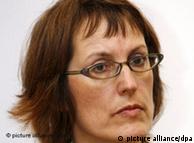
Heffa Schücking's team at 'Urgewald' has been holding German industry to account for environmental impacts abroad since 1992. The secret to her success is simple. If they don't listen to her, she goes after their money.

 
Theirs is a David and Goliath story: Eight environmental activists versus some of Germany's largest players in the world of finance and energy. 

With little funding and plenty of determination, the organization "Urgewald" serves as a voice of social responsibility on large-scale projects outside Germany's borders.

The woman behind the NGO, Heffa Schücking, has made a name for herself as someone who can hamstring or even block controversial initiatives by simply picking up a phone.


Now in her early 50s, Schücking got her start studying biology. In the course of her research on primates, she learned that many ape species are threatened with extinction.

"If you look at the situation of primates worldwide, you soon notice that 90 percent of all primate species are endangered because their habitats are being destroyed," she told Deutsche Welle.

In a bid to find out why that was happening, Schücking got in touch with environmental organizations based in the tropics. Their message: Companies and consumer demand in the Northern Hemisphere are often the source of the problem.

Schücking left university without completing her degree - taking her work outside the classroom. She decided to address the problem of endangered primates directly - which eventually led her to cofound Urgewald in 1992.

During the early 1990s, Germany's environmental movement was growing in both size and strength. The number of conservation organizations was exploding - but most focused on domestic environmental problems.

Schücking and her Urgewald colleagues opted for something different. "We wanted to look at what German companies and banks are doing abroad and which environmental and human rights problems they cause there," she said.


Urgewald made a splash in Germany with a successful campaign against a project spearheaded by the energy giant RWE – one of Europe's five biggest power companies and Germany's second-largest energy provider.

According to Schücking, the firm was planning to fund construction of a new atomic reactor in northern Bulgaria - an area prone to earthquakes.

"A lot of risk factors are involved: a seismic zone; eastern Europe; Bulgaria, the most corrupt land in Europe; and Russian nuclear power plant technology," she said.

But her initial attempts to contact the company didn't get her very far. That is, until Urgewald decided to take the issue directly to RWE's 700 biggest shareholders.

 Their letter posed the question: "Do you want to lose your billion-euro investment … through a nuclear catastrophe in an earthquake zone?" 

The strategy was effective: "RWE laughed at first, but in the end, it worked … It involved an investment of more than four billion euros … We informed the investors that ultimately, the Belene project would also be a risk for them," Schücking said.


Schücking acknowledged that not all of the organization's campaigns have been so successful, but Urgewald's work has prompted banks and other large companies to rethink their business principles.

Stefan Löbbert, corporate sustainability manager at Germany's Hypovereinsbank, said his position was created following a heated disagreement involving Urgewald and other NGOs. The organization had criticized the bank's financing of Siemens, who planned to provide turbines for a dam project in India.

"Urgewald and other NGOs in India took up the topic and informed us of the consequences of the dam in India," Löbbert said - adding that most of the trouble stemmed from resettlement challenges.

"After an extensive discussion with Urgewald, we immediately backed out (of the project)," he said. "That's when we realized that we needed different lending standards, which we then implemented."

The dam in India has still not been built and Hypovereinsbank say it is now committed to sustainable management practices.


Urgewald has a small staff, but the organization has prompted even larger companies to think twice before taking on Schücking and her colleagues.

"I don't want to exaggerate - we don't win every campaign, of course," she said. "But we've seen that the experience for the opponent - a large German company or bank - was so unpleasant that the second time around, they're much more careful or decide to back out altogether."

"Sometimes it just takes a telephone call along the lines of, ‘Do you really want to go through this again?'"

Next up on Schücking's list of projects is making public a list of banks financing Germany's nuclear industry. Even if facing up to nuclear power in Germany will take more than just a phone call, Urgewald's director is confident that the campaign will have an impact.

Author: Jutta Schwengsbier / arp  
Editor: Nathan Witkop


Site Meter